
Report
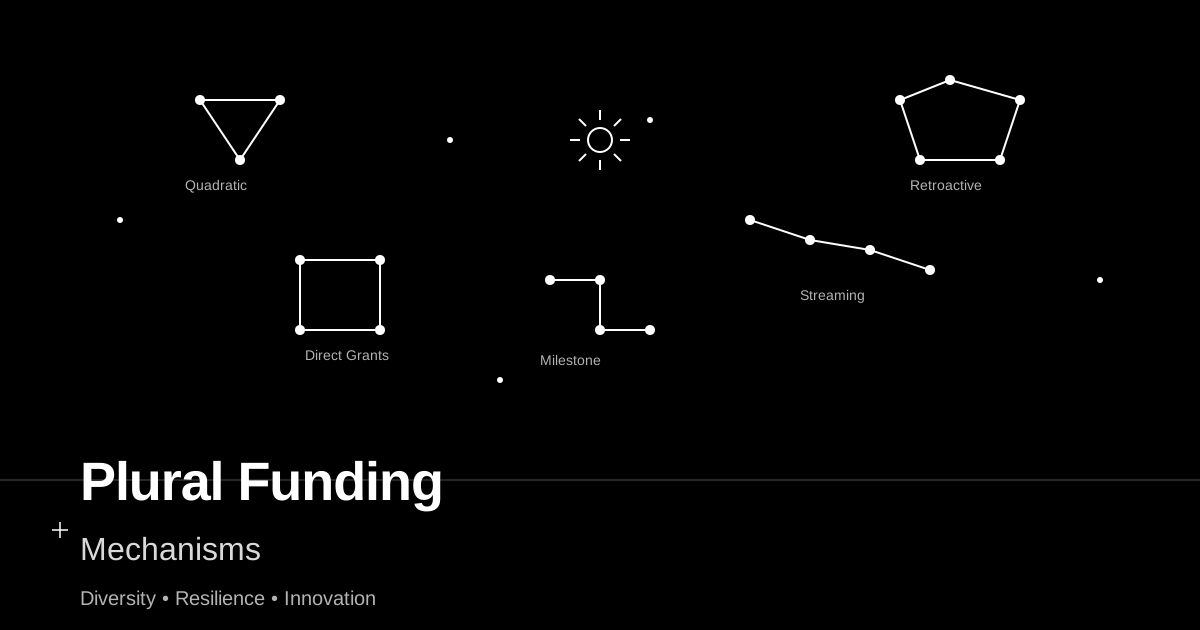
The Case for Plural Funding Mechanisms
Why no single funding mechanism is optimal, and how ecosystems benefit from mechanism diversity.
Funding mechanisms and approaches

Continuous capital allocation triggered by verified community support thresholds.
Continuous governance mechanism where voting power accumulates over time.

A funding allocation mechanism where expert reviewers allocate capital based on judgment, strategy, and expected impact.

Staged funding mechanism that releases grant payments upon verified milestone completion.

Democratic funding mechanism that amplifies small donors via quadratic matching.

Governance mechanism where votes cost quadratically, enabling nuanced preferences.
Capital allocation mechanism that rewards projects for impact after outcomes are known.

Continuous funding mechanism that streams ERC-20 token payments per second instead of lump sums.
Help us document the full landscape of funding mechanisms. Submit new mechanisms or suggest improvements to existing documentation.
Submit a Mechanism